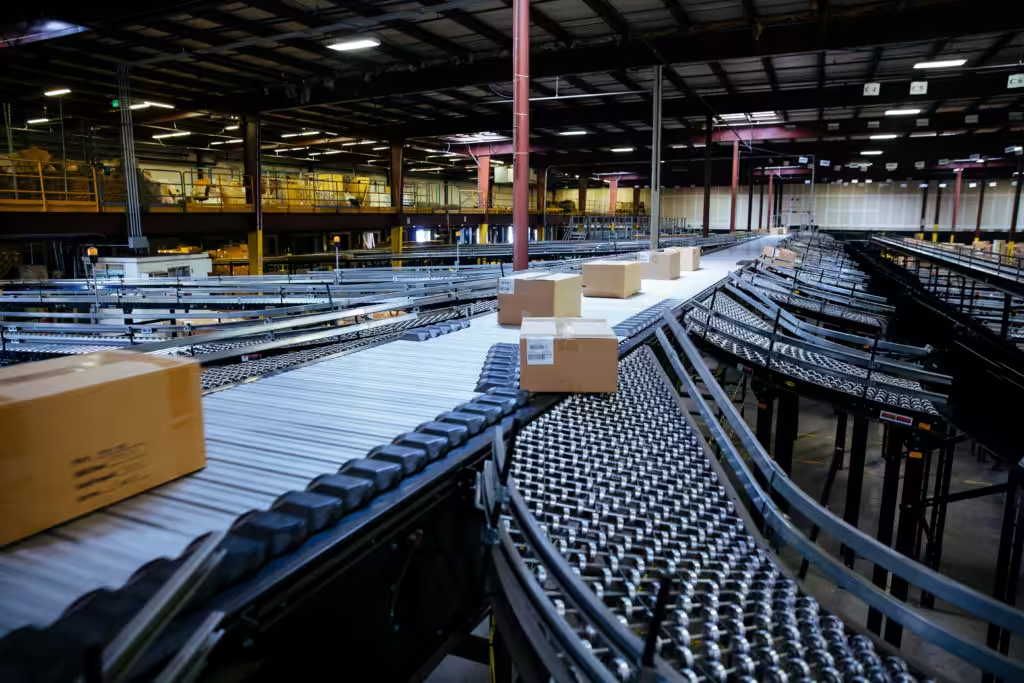
What is an Accumulation Conveyor and When Do You Need One?

An accumulation conveyor is a conveyor system designed to temporarily hold, queue, and release products without requiring the entire material-handling line to stop. You need one when products arrive faster than downstream equipment can temporarily process them, when different processes operate at different speeds, or when automated operations need controlled product spacing and buffering.

How Does an Accumulation Conveyor Work?

A basic conveyor moves products from Point A to Point B. An accumulation conveyor adds another important capability: it allows those products to stop temporarily without necessarily stopping every other part of the conveyor system.

Imagine cartons moving from a picking area toward a packaging machine. The upstream operation may be capable of delivering 50 cartons during a certain period, but the packaging process temporarily has capacity for only 40.

Without buffering, cartons may begin backing up into the upstream process. The entire conveyor may eventually need to stop.

An accumulation conveyor provides controlled space where those extra cartons can wait. Once downstream capacity becomes available, the system releases them and material flow resumes.

This ability to absorb short-term differences between processes can make automated operations much more flexible.

Why Is Accumulation So Important?

Very few industrial processes operate at exactly the same speed all day.

A packaging machine might stop while film is replaced. A sorter could experience temporary congestion. An employee may need additional time to complete a task. A robotic workstation may pause briefly.

If every temporary slowdown immediately stops everything upstream, productivity can suffer.

Accumulation creates a buffer.

It can help facilities:

  • Reduce unnecessary conveyor stoppages
  • Manage short-term congestion
  • Balance processes operating at different speeds
  • Maintain smoother product flow
  • Improve automation flexibility
  • Protect products from excessive contact

The important word is temporary.

An accumulation conveyor can manage normal fluctuations, but it cannot create permanent processing capacity where none exists.

Minimum-Pressure and Zero-Pressure Accumulation

There are different ways to accumulate products, and the right choice depends on the application.

Minimum-Pressure Accumulation

Minimum-pressure systems allow products to queue with controlled contact.

The conveyor reduces the amount of force pushing accumulated products together, helping prevent excessive back pressure.

This approach may work well when products:

  • Can tolerate some contact
  • Are relatively durable
  • Have consistent shapes
  • Don’t require exact spacing

Minimum-pressure systems can offer a practical solution for certain straightforward applications.

Zero-Pressure Accumulation

Zero-pressure accumulation, often called ZPA, is designed to prevent queued products from pressing into one another.

The conveyor is typically divided into zones. Sensors detect whether each zone is occupied, and controls determine whether upstream products should move or wait.

A simplified process looks like this:

  1. A carton enters a conveyor zone.
  2. A sensor detects the carton.
  3. The controls determine whether the next zone is available.
  4. If it is occupied, the carton waits.
  5. When space opens, the carton advances.

This creates separation between loads.

Zero-pressure systems can be useful for fragile cartons, irregular products, automated sortation, and applications where product contact needs to be minimized.

7 Signs You May Need an Accumulation Conveyor

How can you tell whether your operation needs accumulation?

Several common symptoms are worth investigating.

1. Your Conveyor Stops Frequently

If one downstream process repeatedly causes large sections of conveyor to stop, buffering may help isolate those interruptions.

2. Products Regularly Back Up

Frequent queues extending into upstream work areas can indicate inadequate accumulation capacity.

3. Cartons Are Colliding

Repeated product-to-product contact may damage packaging or create unstable material flow.

4. Processes Operate at Different Speeds

When one operation consistently works in short bursts while another runs continuously, accumulation can help balance temporary differences.

5. You’re Adding Automation

Robotics, sortation, scanning, automated packaging, and storage systems often benefit from carefully controlled product spacing.

6. Throughput Has Increased

A conveyor system designed for yesterday’s volume may struggle with today’s demand.

7. Employees Constantly Manage Conveyor Backups

If workers routinely need to intervene because of congestion, the system may require a more engineered solution.

These symptoms don’t automatically mean an accumulation conveyor is the answer, but they provide good reasons for further analysis.

How Accumulation Helps Manage Bottlenecks

Suppose a conveyor delivers 60 cartons per minute toward a process that normally handles the same amount.

Everything works well until the downstream equipment pauses for 20 seconds.

Products continue arriving during that pause.

With no accumulation, the interruption quickly travels upstream. With appropriately sized accumulation, products can temporarily queue while the downstream equipment recovers.

Once it restarts, the accumulated products can begin moving again.

The buffer helps prevent one brief disruption from immediately affecting the entire operation.

However, accumulation needs to be properly sized.

If the downstream process can permanently handle only 40 cartons per minute while upstream equipment continuously delivers 60, additional accumulation merely delays the inevitable backup.

Engineering analysis should therefore distinguish temporary variability from a true capacity problem.

An Accumulation Conveyor Can Help Protect Products

Product protection is another important consideration.

When packages repeatedly collide or are pushed together with excessive pressure, they may experience:

  • Crushing
  • Scuffing
  • Tearing
  • Deformation
  • Label damage

The consequences can extend beyond cosmetic appearance. Damaged packaging may interfere with scanning, automated handling, or customer expectations.

Zero-pressure accumulation can help reduce unnecessary contact by maintaining separation between loads.

This may be especially valuable for:

  • Fragile items
  • Lightweight cartons
  • Irregular packages
  • High-value products
  • Easily damaged packaging

The appropriate conveyor should always be selected according to actual product characteristics.

Accumulation Conveyors and Warehouse Automation

Modern warehouses rarely operate conveyors as completely independent machines.

Conveyors may interact with:

  • Barcode scanners
  • Sorters
  • Robotics
  • Automated storage systems
  • Packaging equipment
  • Warehouse software
  • Control systems

An accumulation conveyor can provide physical buffering while the automation system decides where products should move.

For example, a sorter may temporarily become unavailable. Instead of allowing cartons to overwhelm the area, upstream accumulation zones can hold products until capacity returns.

This combination of intelligent controls and physical buffering creates a more adaptable operation.

Sensors and Controls Make Modern Accumulation Possible

Sensors play a major role in many accumulation systems.

Photoelectric sensors or other detection technologies can identify when a load occupies a particular conveyor zone.

Controls then use that information to determine whether another product should enter.

This allows the conveyor to make rapid decisions continuously throughout operation.

Modern controls can also exchange information with higher-level warehouse systems, depending on the facility’s automation architecture.

The result is much more sophisticated than simply turning a conveyor motor on and off.

Where Are Accumulation Conveyors Commonly Used?

Accumulation can provide value across many industries and facility types.

Common environments include:

  • Distribution centers
  • E-commerce fulfillment operations
  • Manufacturing plants
  • Warehouses
  • Packaging operations
  • Food and beverage facilities
  • Shipping departments
  • Automated sortation systems

An accumulation conveyor may be installed before a process that experiences temporary interruptions or after equipment that produces materials in bursts.

Typical locations include areas near:

  • Packaging equipment
  • Scanners
  • Sorters
  • Robotic work cells
  • Palletizers
  • Shipping lanes
  • Inspection stations

The best location depends on the actual material-flow problem.

How Much Accumulation Do You Need?

This is an engineering question rather than a guess.

Important variables include:

  • Required throughput
  • Product dimensions
  • Product spacing
  • Conveyor speed
  • Typical interruption duration
  • Downstream processing capacity
  • Available floor space

For example, if an operation experiences routine 30-second pauses, engineers can estimate how many products will arrive during those interruptions and evaluate the buffering capacity required.

Simply adding as much conveyor as possible isn’t necessarily efficient.

Too little accumulation may fail to solve the problem. Too much can consume valuable floor space and increase equipment costs without providing meaningful additional benefit.

The goal is to create the right amount of buffering for the operation.

Don’t Ignore Facility Layout

Accumulation needs space.

That means conveyor design must account for the wider facility layout.

Engineers should consider:

  • Employee walkways
  • Forklift routes
  • Columns
  • Equipment
  • Emergency access
  • Maintenance areas
  • Future expansion

A technically capable conveyor can still create operational problems if it blocks important traffic or becomes difficult to service.

LaFayette Engineering approaches material handling from this broader facility perspective.

The best system isn’t simply the conveyor with the highest specifications. It’s the system that works effectively inside the client’s actual operation.

Maintenance Access Is Essential

Conveyors contain moving and electrical components that eventually need inspection or maintenance.

These may include:

  • Rollers
  • Motors
  • Sensors
  • Belts
  • Controllers
  • Electrical equipment

Technicians need safe and practical access.

A poorly designed layout can make routine maintenance unnecessarily difficult and increase downtime when repairs are required.

Maintenance considerations should therefore be addressed during initial system design rather than after installation.

Safety Should Be Engineered Into the System

Conveyors contain moving machinery, so safety must remain part of the design process.

Important considerations can include:

  • Machine guarding
  • Emergency stops
  • Lockout/tagout procedures
  • Safe employee crossings
  • Maintenance access
  • Clear work areas

The Occupational Safety and Health Administration provides workplace safety guidance relevant to machinery and material-handling operations.

Automation should improve productivity without introducing avoidable hazards.

Good engineering considers efficiency, maintainability, and safety together.

Common Accumulation Conveyor Mistakes

Several mistakes can reduce the value of an accumulation system.

Treating Accumulation as a Cure for Insufficient Capacity

Buffering cannot permanently fix an undersized downstream process.

Ignoring Product Characteristics

A conveyor suitable for sturdy cartons may be inappropriate for fragile or irregular products.

Installing Too Little Accumulation

Insufficient buffer space may fail to isolate normal interruptions.

Adding Too Much

Excessive accumulation can consume valuable facility space without producing proportional benefits.

Ignoring Controls Integration

The conveyor needs to communicate properly with surrounding equipment.

Forgetting Future Growth

A system designed exactly for today’s volume may become constrained as the operation expands.

Avoiding these mistakes requires a complete understanding of the facility.

How LaFayette Engineering Can Help

Selecting an accumulation conveyor should begin with understanding the operational problem—not choosing equipment from a catalog.

LaFayette Engineering can help businesses evaluate:

  • Material flow
  • Conveyor requirements
  • Throughput
  • Product characteristics
  • Facility layout
  • Automation integration
  • Existing bottlenecks
  • Future capacity

This engineering-first approach helps ensure technology is selected because it solves a real problem.

LaFayette Engineering’s industrial and logistics expertise can also help organizations understand how an accumulation conveyor fits into the wider material-handling system.

The goal is a coordinated operation in which equipment, people, software, and processes work together.

Frequently Asked Questions

1. What is an accumulation conveyor?

An accumulation conveyor is a material-handling conveyor that temporarily queues products and releases them when downstream capacity becomes available.

2. When do you need an accumulation conveyor?

You may need one when processes operate at different speeds, downstream equipment experiences temporary stops, products are colliding, or an automated system requires controlled buffering.

3. What is zero-pressure accumulation?

Zero-pressure accumulation uses controlled conveyor zones to allow products to queue without pressing directly against one another.

4. Can accumulation increase throughput?

It can help an operation maintain smoother flow and reduce the effects of temporary interruptions. However, it cannot permanently increase the capacity of an undersized downstream process.

5. How much accumulation capacity should a facility have?

The correct amount depends on throughput, product dimensions, interruption duration, downstream capacity, conveyor speed, and available space.

6. Why work with LaFayette Engineering on an accumulation conveyor project?

LaFayette Engineering can evaluate the entire operation—including material flow, facility layout, controls, automation, equipment, and future growth—to help develop an accumulation solution suited to the actual facility.

Conclusion: The Right Buffer Can Keep Your Entire Operation Moving

accumulation conveyor

An accumulation conveyor gives warehouses and manufacturing facilities a controlled way to manage temporary differences between processes.

Instead of allowing a short equipment stop or downstream slowdown to immediately interrupt the entire material-handling line, products can wait in an organized buffer until capacity becomes available again.

That can support smoother material flow, protect products, improve automation flexibility, and reduce unnecessary system-wide stoppages.

But accumulation needs to be engineered correctly.

The amount of buffering, conveyor technology, controls, product characteristics, facility layout, safety requirements, and downstream capacity all need to be considered together.

LaFayette Engineering can help businesses analyze those factors and determine whether an accumulation conveyor is the right solution—and, if so, how it should fit into the larger operation.

When properly designed, an accumulation conveyor doesn’t simply give products somewhere to wait. It gives the entire facility more flexibility to keep moving.

Interested in learning more? Contact LaFayette Engineering here to get started.

LaFayette Engineering’s Intelligent Solutions can Revolutionize your Industrial Projects

Introduction: Smarter Engineering for a More Competitive Future

Today’s industrial businesses face greater challenges than ever before. Manufacturing facilities are expected to produce more products with fewer resources, distribution centers must move inventory faster than ever, and industrial operations are constantly searching for ways to improve efficiency while reducing operating costs. At the same time, new technologies, automation, and data-driven decision-making continue transforming how facilities are designed and operated.

To remain competitive in 2026 and beyond, companies need engineering partners capable of developing intelligent solutions that address both today’s challenges and tomorrow’s opportunities.

LaFayette Engineering has built its reputation by helping manufacturers, industrial facilities, logistics operations, and commercial organizations improve performance through practical engineering expertise. Rather than offering generic recommendations, the company’s team develops customized intelligent solutions that enhance productivity, optimize infrastructure, improve workflows, and support long-term growth.

Whether your organization is expanding a manufacturing facility, modernizing existing infrastructure, integrating automation, or redesigning production processes, LaFayette Engineering provides the experience and technical knowledge needed to achieve measurable results.


The Growing Need for Intelligent Solutions in Modern Industry

Industrial operations have become significantly more complex over the past decade.

Modern facilities must balance:

  • Higher production demands
  • Rising labor costs
  • Increased automation
  • Energy efficiency goals
  • Supply chain challenges
  • Equipment reliability
  • Workforce safety
  • Long-term scalability

Traditional engineering approaches often focus on solving individual problems. Today’s businesses require intelligent solutions that improve entire systems rather than isolated components.

LaFayette Engineering approaches every project with this broader perspective, helping clients create facilities that operate more efficiently while remaining flexible for future growth.


Understanding Intelligent Solutions

The phrase intelligent solutions represents much more than advanced technology.

True intelligent engineering combines:

  • Technical expertise
  • Practical experience
  • Data-driven analysis
  • Strategic planning
  • Operational efficiency
  • Long-term thinking

Rather than simply recommending new equipment or redesigning a layout, LaFayette Engineering evaluates how every component of a facility works together.

This systems-based approach allows organizations to improve productivity while minimizing unnecessary costs.


Optimizing Facility Layouts

Facility organization has a direct impact on productivity.

Poor layouts often create:

  • Production bottlenecks
  • Excessive material movement
  • Longer production cycles
  • Higher labor costs
  • Increased equipment wear

LaFayette Engineering develops intelligent solutions by carefully analyzing:

  • Equipment placement
  • Production flow
  • Material handling
  • Employee movement
  • Storage locations

Small layout improvements frequently produce substantial operational gains without requiring major capital investments.

Well-organized facilities allow employees to work more efficiently while improving overall production capacity.


Improving Manufacturing Efficiency

Manufacturing efficiency remains one of the most important objectives for industrial organizations.

LaFayette Engineering helps improve:

  • Production workflows
  • Equipment utilization
  • Process consistency
  • Resource allocation
  • Facility organization

Rather than making assumptions, engineers study actual operations before recommending improvements.

These intelligent solutions help manufacturers reduce waste while increasing production output.

Improved efficiency often leads to lower operating costs and stronger long-term competitiveness.


Supporting Automation Integration

Automation continues reshaping industrial operations throughout Kentucky and across the nation.

Modern facilities increasingly utilize:

  • Robotic systems
  • Automated conveyors
  • Smart production equipment
  • Vision inspection systems
  • Process monitoring technologies

However, automation succeeds only when properly integrated into existing operations.

LaFayette Engineering develops intelligent solutions that allow new technologies to work seamlessly alongside current production systems.

Proper engineering minimizes downtime while maximizing the benefits of automation investments.


Modernizing Industrial Infrastructure

Many facilities continue operating with infrastructure designed decades ago.

Older systems often limit productivity while increasing maintenance costs.

LaFayette Engineering provides intelligent solutions for infrastructure modernization that include:

  • Electrical upgrades
  • Utility improvements
  • Structural modifications
  • Equipment support systems
  • Facility expansions

Modern infrastructure allows organizations to adopt new technologies while improving operational reliability.

Infrastructure improvements also help prepare facilities for future growth.


Energy Efficiency Engineering

Energy represents one of the largest operating expenses for many industrial businesses.

Reducing energy consumption without sacrificing production requires careful engineering.

LaFayette Engineering develops intelligent solutions through:

  • Utility system evaluations
  • Equipment optimization
  • Electrical infrastructure improvements
  • Facility energy planning
  • Operational efficiency analysis

Improved energy performance benefits both operating budgets and sustainability initiatives.

Small improvements often produce measurable savings over the lifetime of a facility.


Data-Driven Decision Making

Successful engineering depends on accurate information.

Rather than relying on assumptions, LaFayette Engineering uses operational data to evaluate:

  • Equipment performance
  • Production rates
  • Material movement
  • Resource utilization
  • Workflow efficiency

This analytical approach allows engineers to develop intelligent solutions based on measurable facts instead of estimates.

Data-driven planning reduces uncertainty while supporting more informed investment decisions.


Supporting Facility Expansion

Many successful businesses eventually outgrow their original facilities.

Expansion requires careful planning to avoid disrupting existing operations.

LaFayette Engineering develops intelligent solutions that support:

  • Production growth
  • Additional equipment
  • Expanded utilities
  • Increased storage
  • Future automation

Planning ahead reduces future construction costs while allowing businesses to continue growing efficiently.

Scalable engineering remains one of the company’s greatest strengths.


Enhancing Workplace Safety

Safety influences every aspect of industrial engineering.

Well-designed facilities improve both productivity and employee well-being.

LaFayette Engineering incorporates intelligent solutions that address:

  • Equipment access
  • Traffic patterns
  • Emergency routes
  • Material handling
  • Regulatory compliance

Safe facilities often experience fewer operational interruptions while maintaining higher employee satisfaction.

Engineering decisions that prioritize safety also contribute to long-term operational reliability.


Comprehensive Project Management

Industrial improvements often involve multiple contractors, vendors, engineers, and facility personnel.

LaFayette Engineering coordinates these efforts through structured project management that includes:

  • Detailed scheduling
  • Budget oversight
  • Resource coordination
  • Milestone tracking
  • Client communication

Effective management ensures intelligent solutions are implemented successfully while minimizing disruptions to ongoing operations.

Clear communication allows every project participant to remain aligned throughout construction and implementation.


Building Long-Term Partnerships

LaFayette Engineering views every project as the beginning of an ongoing relationship.

The company continues supporting clients through:

  • Facility evaluations
  • Future planning
  • Infrastructure consultation
  • Operational improvements
  • Engineering recommendations

These long-term partnerships help organizations continue identifying opportunities for improvement as business needs evolve.

Providing ongoing intelligent solutions allows clients to remain competitive well into the future.


Why Businesses Choose LaFayette Engineering

Organizations throughout Kentucky continue choosing LaFayette Engineering because of its:

  • Extensive industrial engineering experience
  • Practical problem-solving approach
  • Customized engineering strategies
  • Strong project management
  • Data-driven decision making
  • Commitment to innovation
  • Focus on long-term operational success

Every project receives personalized attention rather than standardized recommendations.

This client-focused approach allows the company to consistently deliver intelligent solutions that create measurable value.


Preparing for the Future of Industrial Engineering

Industrial technology continues evolving rapidly.

Future facilities will increasingly rely on:

  • Artificial intelligence
  • Smart manufacturing systems
  • Advanced automation
  • Digital facility monitoring
  • Predictive maintenance
  • Connected industrial equipment

LaFayette Engineering remains committed to helping clients prepare for these developments through forward-thinking engineering strategies.

Its intelligent solutions are designed not only for today’s operational challenges but also for tomorrow’s technological opportunities.

Businesses that invest in smart engineering today will be better positioned to compete in the years ahead.


Frequently Asked Questions

1. What are intelligent solutions in industrial engineering?

Intelligent solutions combine engineering expertise, operational analysis, technology integration, and strategic planning to improve facility performance and efficiency.

2. What industries does LaFayette Engineering serve?

The company supports manufacturing, logistics, industrial processing, warehousing, distribution, and commercial operations.

3. Can existing facilities benefit from intelligent solutions?

Yes. Many projects involve modernizing current facilities through improved layouts, automation integration, infrastructure upgrades, and workflow optimization.

4. Does LaFayette Engineering assist with automation projects?

Absolutely. The company helps businesses integrate automation technologies into existing operations while minimizing production disruptions.

5. How do intelligent solutions improve productivity?

By optimizing workflows, improving equipment utilization, reducing waste, enhancing facility layouts, and supporting better operational decision-making.

6. Why choose LaFayette Engineering?

Businesses choose LaFayette Engineering because of its technical expertise, practical experience, customized engineering strategies, and commitment to delivering long-term intelligent solutions that improve operational performance.


Conclusion: Engineering Smarter Solutions for Industrial Success

Intelligent Solutions

Industrial success depends on more than modern equipment or expanded facilities. Sustainable growth requires thoughtful planning, efficient processes, adaptable infrastructure, and engineering expertise that supports long-term operational excellence.

LaFayette Engineering helps organizations achieve these goals by delivering intelligent solutions tailored to each client’s unique operational needs. Through facility optimization, automation integration, infrastructure modernization, project management, and strategic planning, the company enables manufacturers and industrial businesses to improve productivity while preparing for future growth.

As industrial operations continue evolving throughout 2026 and beyond, companies that embrace intelligent solutions will be better positioned to compete in an increasingly demanding marketplace. With its commitment to innovation, technical excellence, and practical engineering expertise, LaFayette Engineering remains a trusted partner for organizations seeking to revolutionize their industrial projects and build lasting success.

Want to experience those intelligent solutions for yourself? Click here to get started.

Lafayette Engineering sets a new Manufacturing Industry Standard for Central Kentucky in 2026

Introduction: Raising the Bar for Manufacturing in 2026

The manufacturing sector in Central Kentucky continues to evolve rapidly. With increasing demand for automation, efficiency, and precision, companies must operate at higher levels than ever before. In 2026, one company is redefining what excellence looks like: LaFayette Engineering.

By combining advanced engineering practices with deep industry experience, LaFayette Engineering is establishing a new Manufacturing Industry Standard for the region. Their commitment to innovation, quality, and measurable performance is helping manufacturers operate smarter, safer, and more competitively.


The Changing Landscape of Manufacturing in Central Kentucky

Central Kentucky has long been a stronghold for manufacturing. From automotive suppliers to advanced materials production, the region supports a wide range of industrial operations. However, modern manufacturing demands more than traditional processes.

Today’s facilities must prioritize:

  • Operational efficiency
  • Lean production systems
  • Automation integration
  • Facility optimization
  • Safety compliance
  • Scalable infrastructure

Meeting these demands requires more than equipment upgrades. It requires strategic engineering leadership—something LaFayette Engineering delivers consistently.


What Defines a Manufacturing Industry Standard in 2026?

A true Manufacturing Industry Standard in 2026 goes beyond productivity numbers. It represents a benchmark for:

  • Precision engineering
  • Process optimization
  • Sustainable operations
  • Workforce safety
  • Technological adaptability

LaFayette Engineering approaches every project with these priorities in mind, ensuring that manufacturers are not just keeping up—but leading.


How LaFayette Engineering Sets the Manufacturing Industry Standard

1. Advanced Facility Design

Efficient plant layouts reduce waste, improve workflow, and enhance safety. LaFayette Engineering designs manufacturing facilities that optimize material flow, reduce bottlenecks, and improve production throughput.

2. Automation Integration Expertise

Automation is no longer optional in modern manufacturing. LaFayette Engineering integrates robotics, conveyor systems, and automated material handling solutions seamlessly into existing operations.

3. Process Optimization and Lean Engineering

Improving efficiency is about refining processes, not just adding equipment. The company evaluates workflows to eliminate redundancies and maximize output.

4. Infrastructure Modernization

A new Manufacturing Industry Standard requires updated electrical systems, structural enhancements, and robust utility infrastructure. LaFayette Engineering ensures facilities are built to handle modern production demands.

5. Safety-First Engineering

Safety is a defining characteristic of any true industry benchmark. LaFayette Engineering incorporates safety systems, improved traffic flow, and risk-reduction strategies into every design.

6. Data-Driven Decision Making

Modern manufacturing relies on accurate data. LaFayette Engineering uses performance analytics and modeling to guide system improvements and facility upgrades.

7. Scalable Solutions for Growth

Manufacturers in Central Kentucky are expanding. LaFayette Engineering designs facilities with future capacity in mind, allowing businesses to scale without major disruptions.

8. Sustainability and Energy Efficiency

Environmental responsibility is part of the evolving Manufacturing Industry Standard. The company integrates energy-efficient systems and sustainable practices into project designs.

9. Cross-Industry Expertise

LaFayette Engineering serves a diverse range of industries, allowing them to apply best practices across sectors and introduce innovative solutions.

10. Commitment to Long-Term Performance

True leadership in manufacturing means building systems that perform consistently over time. Durability, reliability, and low maintenance are key outcomes of their engineering approach.


Why Central Kentucky Manufacturers Choose LaFayette Engineering

Manufacturers throughout the region recognize that meeting a new Manufacturing Industry Standard requires more than incremental improvements. They need:

  • Experienced engineering leadership
  • Structured project management
  • Reliable execution
  • Forward-thinking solutions

LaFayette Engineering delivers on all fronts, positioning Central Kentucky as a competitive manufacturing hub in 2026 and beyond.


The Regional Impact of a Higher Manufacturing Industry Standard

When engineering standards rise, the entire region benefits. Improved facilities lead to:

  • Increased productivity
  • Stronger job growth
  • Enhanced safety performance
  • Greater economic competitiveness

By setting a new Manufacturing Industry Standard, LaFayette Engineering is helping elevate Central Kentucky’s reputation as a leader in modern manufacturing.


Frequently Asked Questions (FAQs)

1. What does a Manufacturing Industry Standard include?

It includes benchmarks for safety, efficiency, automation, and operational performance.

2. How does LaFayette Engineering improve manufacturing facilities?

Through facility redesign, automation integration, infrastructure upgrades, and process optimization.

3. Can existing plants be modernized to meet new standards?

Yes. LaFayette Engineering specializes in upgrading and optimizing existing operations.

4. Is automation necessary for modern manufacturing?

In most cases, automation improves efficiency, accuracy, and long-term scalability.

5. How does LaFayette Engineering support growth?

By designing systems that allow facilities to expand production capacity without major structural changes.

6. Why is Central Kentucky important for manufacturing?

The region offers strong infrastructure, workforce talent, and strategic location advantages.


Conclusion: Leading Manufacturing Forward in 2026

Manufacturing Industry Standard

In 2026, manufacturing success depends on engineering precision, innovation, and forward-thinking design. LaFayette Engineering has demonstrated its ability to raise expectations and redefine performance across Central Kentucky.

By setting a new Manufacturing Industry Standard, LaFayette Engineering is not just supporting local manufacturers—it is shaping the future of industrial excellence in the region.

Want to see that standard of excellence for yourself? Contact LaFayette Engineering here to get started.
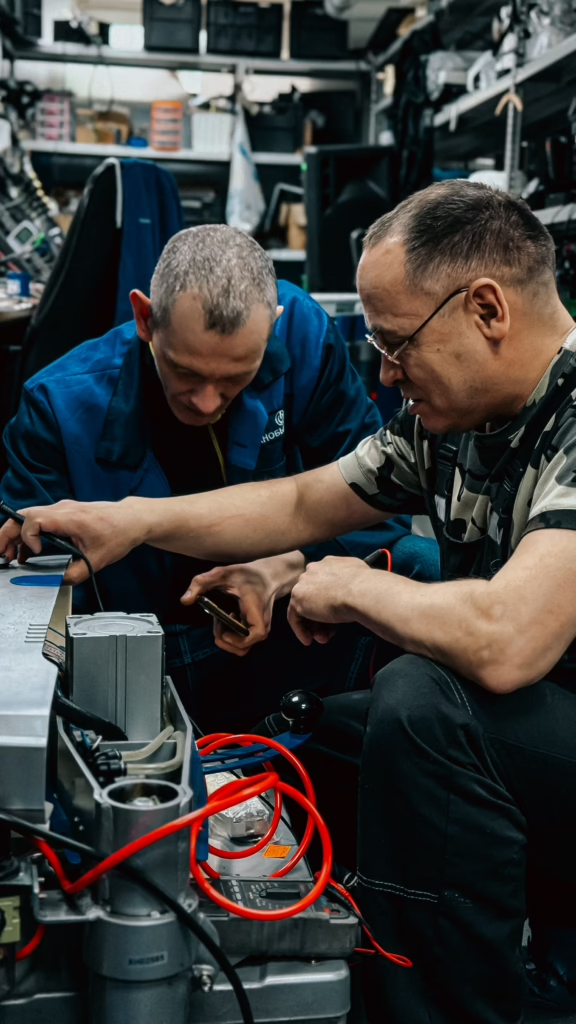
Tailoring Control Systems to Propel Your Business Forward

Control Systems

LaFayette Engineering: Your Premier Partner in Control Systems Integration

LaFayette Engineering, rooted in Danville, Kentucky, stands as a leading integrator of control systems, focusing on the design and execution of sophisticated conveyor systems for material handling. Our portfolio showcases successful collaborations with prominent companies, reflecting our prowess in tailoring conveyor solutions to both new and pre-existing warehouse and distribution facilities.

Control Systems

The cornerstone of any efficient conveyor system is its controls. At LaFayette Engineering, we meld our profound electrical engineering expertise with cutting-edge technology and control mechanisms. This fusion is aimed at amplifying equipment effectiveness, escalating system efficiency, curtailing operational expenses, and boosting productivity, all while ensuring adaptability in your material handling systems.

Crafting Bespoke Solutions for Material Handling

LaFayette Engineering dedicates itself to inventing, designing, and constructing customized solutions addressing typical challenges in material handling. Our team of seasoned engineers invests time in comprehending your distinct processes, collaborating closely with you to craft solutions perfectly aligned with your business requirements.

Our industrial automation systems are engineered prioritizing performance, precision, resilience, and dependability. These solutions are renowned for their industry-leading throughput and speed capabilities, rigorously tested before deployment in your facility.

In our control systems, we consistently employ open, non-proprietary components and programming structures. By utilizing components from established industry leaders for starters, relays, lights, switches, etc., we not only adhere to stringent quality standards but also guarantee the availability of spare parts locally and as required.

Whether it’s a new installation or an upgrade to an existing system, LaFayette Engineering can swiftly deliver a competitive quote for any control application. Our spectrum ranges from small-scale control panel projects to comprehensive, customized solutions for complex challenges, ensuring optimal value for your investment.

Our Methodical Approach to Project Execution

LaFayette Engineering’s meticulous process encompasses:

  • Comprehensive assessment of your specific needs.
  • Development of innovative conveyor concepts.
  • Generation of detailed AutoCAD electrical control drawings, including panel layouts with bill of materials, motor power wiring, electrical schematics, input/output schematics, and field wiring diagrams.
  • Fabrication of state-of-the-art control panels.
  • Advanced PLC Programming with sortation logic.
  • Thorough project management, from inception to completion.
  • Coordinated installation processes.
  • Field installation with precision.
  • Development and tracking of punch lists.
  • Launch assistance, providing start-up support directly at your facility.
  • Continuous service and support, ensuring enduring system performance.

By choosing LaFayette Engineering, you partner with a team committed to driving your operational success to new heights through innovative and reliable control system solutions.