
NFPA 79 is the National Fire Protection Association’s Electrical Standard for Industrial Machinery. For a conveyor system, it governs the electrical equipment of the machine itself: the disconnect, the control panels, the motor circuits, the control circuits, the emergency stops, and the field wiring out to every motor, photo eye, and divert.
Most operations leaders never open the standard, and they don’t need to. What they need is a clear picture of what the standard asks of a conveyor control system, why it matters when something goes wrong at 2 a.m., and how to tell whether the panels on their floor were built to it. This guide covers all three.
At a glance
- NFPA 79 applies to industrial machines operating at 1000 volts or less, and NFPA lists conveyors and material-handling machines among the examples it covers.
- The National Electrical Code (NFPA 70) governs the building wiring up to the machine. NFPA 79 takes over where the supply conductors land on the machine’s electrical equipment.
- It becomes binding through adoption by your local authority, through your specification, or through your insurer or corporate engineering standards.
- Nine areas do most of the work on a conveyor: risk assessment, the disconnect, shock protection, short-circuit current rating, motor protection, stop functions, control circuits, conductor identification, and documentation.
Table of Contents
What NFPA 79 Is, and Where the NEC Stops
The standard exists to make the electrical equipment supplied as part of an industrial machine safe for the people who run and maintain it, and to protect the machine and the building around it. It covers machines supplied at 1000 volts or less, which includes every conveyor control system most distribution centers will ever run.
The line between NFPA 79 and the NEC is the most useful thing to understand. The NEC covers the building side: the feeder from your switchgear, the branch circuit, and the supply conductors that run to the conveyor. NFPA 79 starts at the point where those supply conductors connect to the machine’s electrical equipment, usually the line side of the main disconnect on a motor control panel. From that terminal inward, the panel, the field wiring, and the devices on the conveyor follow the machine standard.
NEC Article 670 is where the two meet. It covers the supply conductors and overcurrent protection feeding industrial machinery, and the information the machine’s nameplate has to carry so the electrician on the building side can size that feed correctly. When a new sortation line is added to a building, the electrical contractor works from the NEC and Article 670, and the controls integrator builds the machine side. If those two parties don’t talk, the machine ends up fed by a circuit that doesn’t match what the panel can safely handle.
Does NFPA 79 Apply to Conveyor Systems?
Yes. NFPA’s own overview of the standard lists material-handling machines as one of the categories in its annex of example machines, and it names conveyors specifically, alongside industrial robots and carton-strapping machines.
A conveyor system is also rarely one machine. A distribution center line might include accumulation conveyor, a merge, a scan tunnel, a print-and-apply station, a sorter, and dozens of takeaway spurs, all coordinated by one control system. The standard treats a coordinated group like that as industrial machinery too, which is why the standard tends to follow the controls rather than any single piece of mechanical equipment.
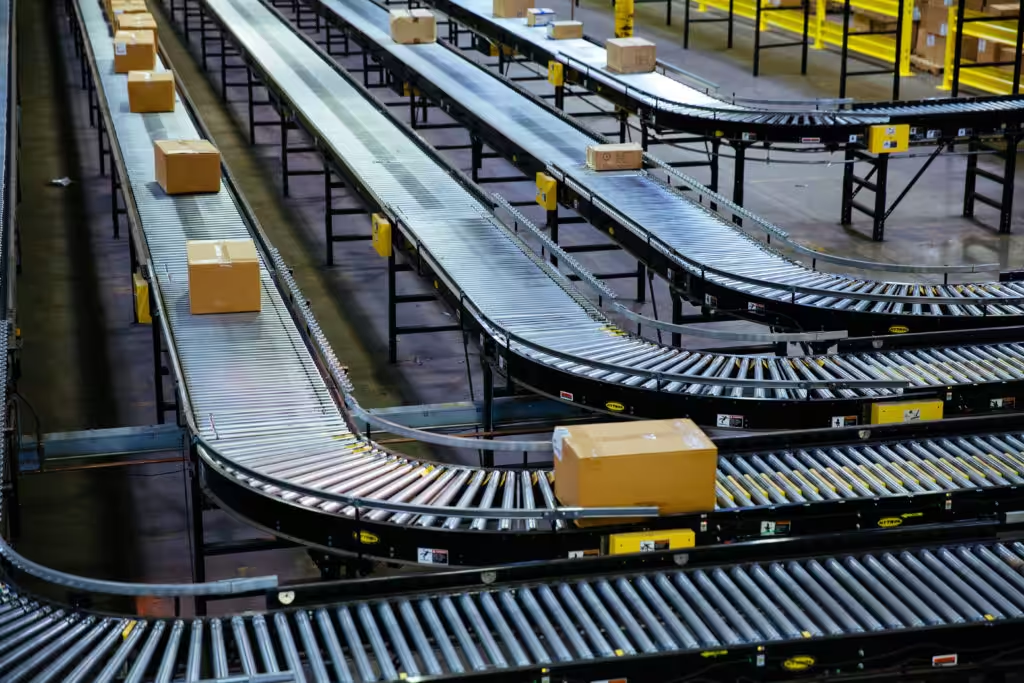
The practical consequence for an owner: the compliance question belongs to whoever designs and builds your control panels and field wiring. That’s the controls integrator, not the conveyor manufacturer that shipped the bed sections.
Is NFPA 79 Mandatory?
NFPA 79 is a consensus standard, and on its own it carries no legal force. It becomes mandatory in one of four ways:
- Your authority having jurisdiction adopts or enforces it. Many electrical inspectors expect industrial machinery to follow it, especially on new installations.
- Your project specification requires it. Corporate engineering standards and equipment specifications for large distribution centers often name it directly.
- Your insurer requires it. Loss-control engineers may ask for compliance on machinery that runs unattended or around the clock.
- Workplace safety rules point to it. OSHA doesn’t adopt the standard by name, but its general electrical requirements call for approved equipment installed and used as intended (29 CFR 1910.303). Its lockout/tagout rule depends on energy-isolating devices that can actually be locked out (29 CFR 1910.147). A panel built to the standard makes both much easier to satisfy.
Even where nobody forces it, this standard is the shared language integrators, electricians, inspectors, and safety managers use for machine wiring. Building to it means the next person who opens the panel can understand it. This article is general information, not engineering or legal advice. Your inspector and your specification have the final word.
9 Areas of NFPA 79 That Shape a Conveyor Control System
The full standard is long. These nine areas are the ones that change how a conveyor control system is designed, built, and maintained.
1. Risk Assessment Comes First
The standard expects each machine to be evaluated for hazards, with the risk from each one reduced to an acceptable level. On a conveyor that means more than pinch points. It includes what happens when a photo eye fails, when a drive faults mid-merge, when power drops and returns, and when a technician has to clear a jam inside a guarded area. The answers drive later decisions: how many disconnects, where the emergency stops go, and which circuits must stop the conveyor in a controlled way.
2. The Supply Disconnect
Every machine needs a supply disconnecting means that can isolate it from power, and that disconnect has to be lockable in the off position. On a conveyor, this is the device your maintenance team locks out before reaching into a panel or under a belt.
Large systems often need more than one. A sorter, a mezzanine pick module, and a shipping line may each get their own disconnect, so one area can be locked out while the rest of the building keeps shipping. That design choice affects both safety and throughput, so make it on purpose during design rather than discover it during the first lockout.
3. Protection Against Electric Shock
Chapter 6 of NFPA 79 covers how the machine protects people from electric shock. The familiar tools are enclosures, door interlocks, fault protection, and double insulation. It also covers protective extra-low voltage (PELV) and Class 2 circuits.
That last point matters on modern conveyors. Motor-driven roller zones, photo eyes, and much of the field I/O run on 24 volts DC. Designing those circuits within the standard’s low-voltage provisions reduces the shock hazard for anyone who touches the field devices, and it simplifies how technicians troubleshoot a live line.
4. Short-Circuit Current Rating
Short-circuit current rating, or SCCR, is the maximum fault current a panel can withstand safely. NFPA 79 addresses it in Chapter 7, and the machine’s nameplate has to carry it so the building side can confirm the available fault current at that point doesn’t exceed it.
SCCR problems show up on conveyor projects for a simple reason: a panel’s rating is limited by its weakest component, and components change. A drive gets swapped for a different model during a retrofit. A utility upgrade or a new transformer raises the available fault current at the panel. Nobody updates the label. The panel looks fine until a fault proves it isn’t. Ask for the SCCR on every panel, and ask how it was determined.
5. Motor and Overcurrent Protection
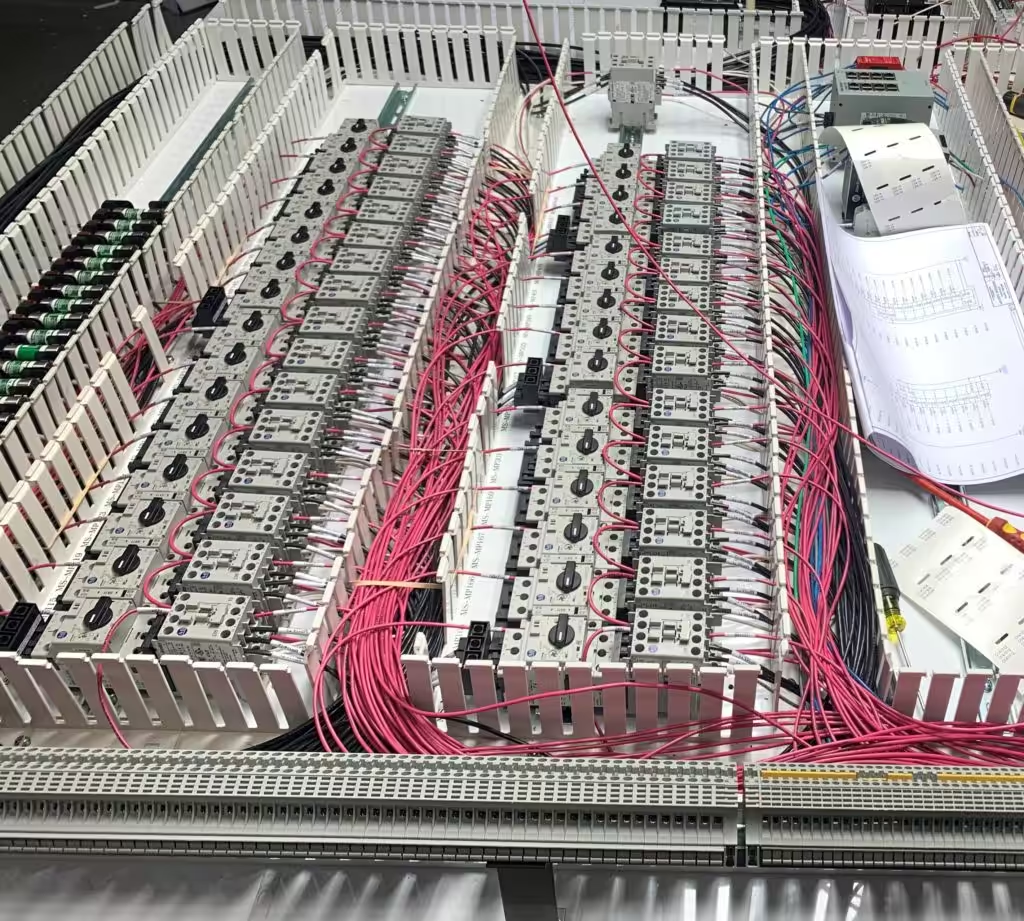
A conveyor can carry dozens or hundreds of motors, which makes motor protection one of the biggest parts of the control panel. The standard calls for overcurrent protection on power, control, and lighting circuits and on transformers, plus overload protection for motors. It also covers loss of cooling, ground faults, surges, abnormal temperatures, loss or reduction of supply voltage, and incorrect phase sequence.
In practice, that’s the row of motor protectors and starters in the photo above. Each protects one motor circuit so a single jammed roller or failed motor trips its own device instead of taking down a whole line.
6. Stop Functions and Emergency Stops
NFPA 79 defines three stop categories. Category 0 removes power immediately. Category 1 brings the machine to a controlled stop and then removes power. Category 2 is a controlled stop with power left available. An emergency stop must be Category 0 or Category 1.
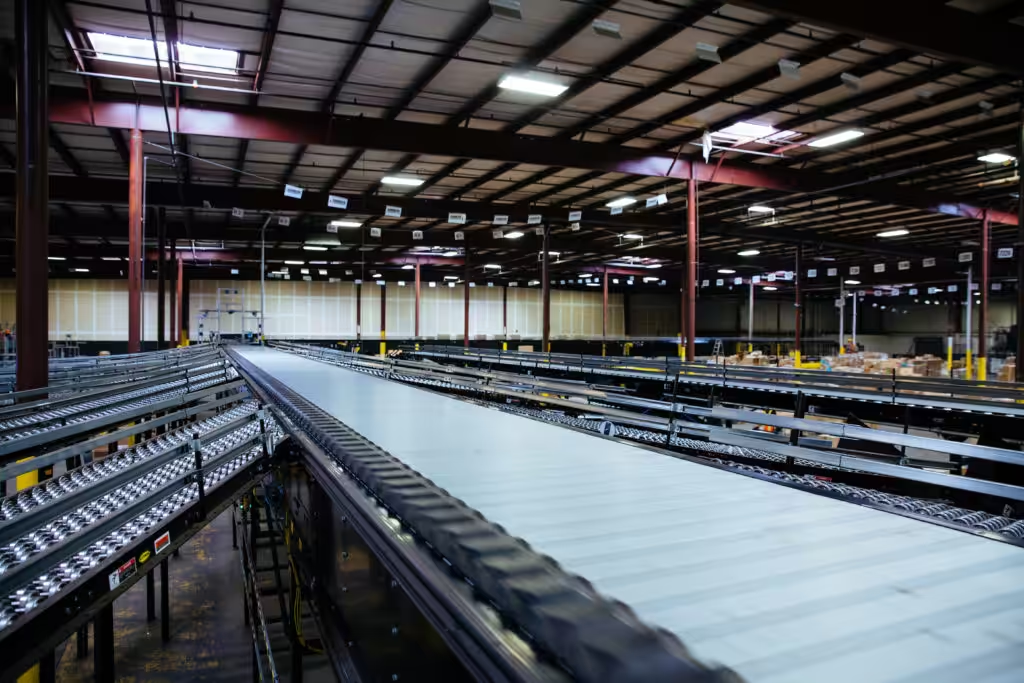
On a conveyor, this shapes the e-stop pushbuttons at every operator station and the pull cords along long runs. A Category 1 stop lets a high-speed merge or sorter brake product to a stop instead of dumping cartons, then removes power. Resetting an emergency stop must never restart the conveyor by itself. Restart has to be a separate, deliberate action. The more e-stop zones a system has, the more those choices affect both safety and how fast a shift recovers.
7. Control Circuits
The control circuit is the low-power side that tells the motors what to do: PLC outputs, relay coils, starters, and pilot devices. The standard sets rules for how control circuits are supplied (typically through a control transformer or a DC power supply), protected, and grounded. The goal is that a single fault in the control circuit can’t start a motor unexpectedly or keep one running when it should stop.
That’s also why the PLC alone shouldn’t carry the safety function. Emergency stop circuits typically run through safety-rated relays or safety controllers, so the PLC monitors the safety state without controlling it.
8. Conductor Identification and Color
Open a well-built NFPA 79 panel and the wiring tells you what it does before you read a single label. Where conductors are identified by color, the standard’s conventions run roughly like this:
- Black: ungrounded AC and DC power conductors.
- Red: ungrounded AC control conductors.
- Blue: ungrounded DC control conductors.
- Orange: circuits that stay energized when the main disconnect is off, such as a feed from another panel. Older panels may use yellow.
- White or gray: grounded (neutral) AC conductors, with white and a blue stripe for grounded DC.
- Green, or green with a yellow stripe: equipment grounding conductors.
The standard includes exceptions and alternatives, so check the edition your project specifies. The point for an owner is simple: orange wiring tells a technician that turning off this panel’s disconnect did not make everything inside it safe. Every conductor should also carry a label that matches the drawings at both ends.
9. Documentation
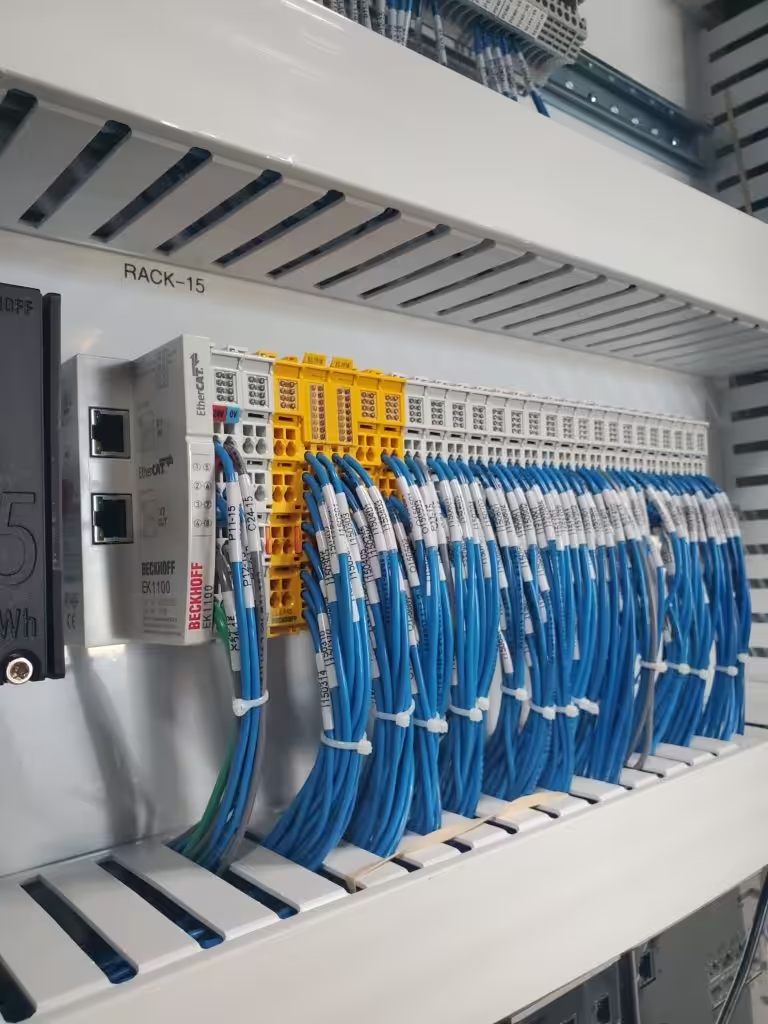
The standard expects the machine to come with the documentation needed to install, operate, and maintain it safely, and its annexes give detailed guidance on technical documentation. For a conveyor control system, that means electrical schematics, panel layouts, a bill of materials, I/O lists, and field wiring diagrams that match what’s actually installed.
Documentation is the area that decays fastest. After two retrofits and a handful of field changes, the drawings in the panel pocket may describe a system that no longer exists. That gap costs time on every service call, and it can turn a routine lockout into guesswork.
How NFPA 79 Relates to UL 508A
The two are often mentioned together, and they answer different questions. UL 508A is the standard for building and listing industrial control panels. NFPA 79 covers the electrical equipment of the whole machine: the panels, plus the field wiring, devices, stop functions, and documentation around them.
A panel can carry a UL 508A listing and still sit inside a conveyor system whose field wiring or e-stop design doesn’t follow the machine standard. A panel built to machine-standard practices may not carry a UL listing at all. Many specifications ask for both. UL 508A includes provisions for panels intended for industrial machinery that line up with NFPA 79, so the two work together when a project calls for both. If your specification requires a listed panel, confirm it with your panel builder before the order is placed.
Where Conveyor Projects Drift Away From NFPA 79
Most of these problems on conveyors build up over years of changes. These are the patterns worth checking in any system more than a few years old:
- SCCR labels that no longer match the components or the building. Retrofits and utility changes both move the numbers.
- E-stop zones added without revisiting the safety circuit. A new spur or pick module gets a pushbutton, but nobody re-evaluates what that stop actually stops.
- Several integrators, several wiring styles. A system taken over from another integrator often mixes conventions, which slows every troubleshooting call.
- Drawings that stopped at the last major project. Field changes since then live in someone’s memory.
- Disconnects that are hard to reach or hard to lock. Pallets, racking, and new equipment end up in front of them.
None of these show up during normal operation. They show up during a fault, an inspection, or an incident investigation, which is the worst time to find them.
Questions to Ask Your Controls Integrator About NFPA 79
Use these on a new project, or when someone takes over support of an existing system:
- Do you build conveyor control panels to NFPA 79 by default, or only when the specification calls for it?
- What edition of the standard will you design to?
- How do you determine and document the SCCR for each panel?
- How many supply disconnects will the system have, and what will each one isolate?
- Which stop category will each emergency stop use, and how is the safety circuit separated from the PLC?
- What wire color and labeling conventions will you follow in the panels and in the field?
- What documentation will we receive at handover, and in what format?
- When we modify the system later, how will you keep the drawings and labels current?
An integrator who answers these without hesitating has likely built to the standard many times. One who has to look them up is telling you something too.
How LaFayette Engineering Builds Conveyor Controls
LaFayette Engineering designs and fabricates its control panels in-house, from small push-button enclosures to large motor control panels, built to industry or customer specifications. Every panel is tested by LEI’s in-house electrical engineering team before it ships, and every panel is labeled and documented so the system’s architecture is clear to the people who maintain it.
The documentation starts early. LEI produces AutoCAD Electrical drawings for each project, including panel layouts with a bill of materials, motor power wiring, electrical schematics, I/O schematics, and field wiring diagrams. LEI also uses only open, non-proprietary components from established manufacturers, so replacement parts are available locally when a device fails. In the field, LEI’s trained, experienced electricians install the wiring to the applicable codes and standards.
If you’re planning a new conveyor system, adding to an existing one, or trying to make sense of panels built by several different integrators, start with LEI’s control panel design and fabrication and electrical installation teams. For more on the design side, see What is Control Panel Design?
Frequently Asked Questions
What is NFPA 79?
NFPA 79 is the Electrical Standard for Industrial Machinery, published by the National Fire Protection Association. It covers the electrical and electronic equipment of industrial machines operating at 1000 volts or less, from the point where the supply conductors connect to the machine inward.
Does NFPA 79 apply to conveyors?
Yes. NFPA lists material-handling machines among the example machines covered by the standard and names conveyors specifically. A coordinated system of conveyors, sorters, and related equipment is treated as industrial machinery as well.
Is NFPA 79 mandatory?
It’s a voluntary consensus standard until something makes it binding: it becomes mandatory when your authority having jurisdiction enforces it, when your project specification requires it, or when your insurer or corporate engineering standards call for it. Many distribution center specifications name it directly.
What’s the difference between NFPA 79 and the NEC?
The NEC (NFPA 70) covers building wiring, including the supply conductors that feed a machine. The machine standard covers the machine’s own electrical equipment, starting where those supply conductors connect. NEC Article 670 connects the two by covering the supply to industrial machinery.
What’s the difference between NFPA 79 and UL 508A?
UL 508A covers how industrial control panels are built and listed. NFPA 79 covers the electrical equipment of the whole machine, including field wiring, stop functions, and documentation. Many projects require both.
What wire colors does NFPA 79 use?
Where color identifies conductors, the usual conventions are black for power, red for AC control, blue for DC control, orange for circuits that stay energized with the disconnect off, white or gray for grounded conductors, and green or green with yellow for equipment grounding. Check the edition your project specifies for exceptions.
Does NFPA 79 require a short-circuit current rating?
Yes. The standard addresses short-circuit current rating, and the machine’s nameplate carries it so the building side can confirm the available fault current doesn’t exceed what the equipment can withstand.
Which edition of NFPA 79 is current?
The 2024 edition is current as of this writing, and the next revision cycle is underway. Your project specification or inspector determines which edition applies.
This article is general information, not engineering or legal advice. For the complete requirements, see NFPA 79 and NFPA’s own overview of the standard.