Table of Contents
For warehouse managers and business owners, one of the most important questions is: How much does warehouse automation cost?
The answer depends on the specific challenges your facility needs to solve.
Businesses throughout Kentucky and across the United States are exploring automation to improve productivity, reduce repetitive labor, increase inventory accuracy, and support growing order volumes. However, investing in automation without understanding the full costs can create financial challenges.
LaFayette Engineering understands that successful warehouse automation begins with practical engineering and careful planning. Before selecting equipment, businesses should evaluate their material flow, facility layout, operational requirements, and long-term goals.
If you’re wondering “how much does warehouse automation cost?” for your operation, this guide explores realistic budgeting ranges for common technologies and explains the factors that influence your final investment.
The following figures are illustrative U.S. planning estimates rather than verified November 2026 vendor quotations. Actual prices depend on equipment specifications, supplier proposals, project scope, and installation requirements.
How Much Does Warehouse Automation Cost? A 2026 Pricing Overview
Warehouse automation costs vary significantly depending on the technology.
A small warehouse may benefit from basic scanning equipment or a short conveyor installation. A large distribution center may require automated storage, robotics, sophisticated sorting systems, and advanced warehouse software.
The following table provides preliminary budgeting ranges.
| Automation Type | Estimated 2026 Cost |
|---|---|
| Barcode scanning and tracking | $5,000–$30,000 |
| Pick-to-light systems | $10,000–$100,000+ |
| Basic conveyor installation | $15,000–$100,000+ |
| Powered conveyor systems | $50,000–$500,000+ |
| Automated sortation systems | $150,000–$2 million+ |
| Autonomous mobile robots | $20,000–$100,000+ per robot |
| Vertical lift modules | $75,000–$250,000+ per unit |
| Automated storage and retrieval systems | $250,000–$5 million+ |
| Warehouse management software | $10,000–$250,000+ |
| Warehouse control system integration | $50,000–$500,000+ |
| Large integrated automation projects | $1 million–$10 million+ |
These figures represent broad planning ranges rather than guaranteed prices. Some describe individual equipment purchases, while others describe larger implementations.
When researching how much warehouse automation costs, businesses should request detailed proposals that explain exactly what is included.
1. How Much Does Warehouse Automation Cost for Conveyor Systems?
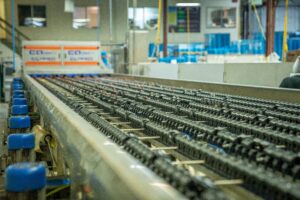
Conveyors are among the most common forms of warehouse automation.
They transport cartons, totes, packages, and other materials between work areas, reducing the need for repetitive manual transportation.
Common conveyor technologies include:
- Belt conveyors
- Powered roller conveyors
- Gravity conveyors
- Accumulation conveyors
- Sortation conveyors
A smaller conveyor installation may cost approximately $15,000 to $100,000 or more.
Larger powered conveyor networks may range from $50,000 to $500,000 or substantially higher.
Costs depend on:
- Conveyor length
- Product weight
- Required speed
- Motor specifications
- Controls
- Installation complexity
- Software integration
For example, a short conveyor connecting picking and packing areas may require a relatively modest investment.
A distribution center with multiple conveyor levels, scanners, accumulation zones, and automated routing will require considerably more equipment and engineering.
LaFayette Engineering can help businesses evaluate conveyor requirements before investing.
2. How Much Does Warehouse Automation Cost for Sortation Systems?
Automated sortation systems direct products toward specific destinations.
They are commonly used in fulfillment operations and distribution centers processing large quantities of packages.
Common technologies include:
- Pop-up wheel sorters
- Sliding shoe sorters
- Cross-belt sorters
- Tilt-tray sorters
A smaller automated sortation project may begin around $150,000, while larger systems can exceed $2 million.
The final price depends on throughput, product characteristics, number of destinations, and integration requirements.
For businesses asking how much does warehouse automation cost, sortation is one area where equipment capacity can dramatically influence the investment.
A system handling a few thousand packages per hour requires different engineering from one designed for much higher volumes.
3. How Much Does Warehouse Automation Cost for Autonomous Mobile Robots?
Autonomous mobile robots, commonly called AMRs, transport materials throughout warehouses using navigation technology and onboard sensors.
They may move:
- Cartons
- Totes
- Parts
- Shelving units
- Other compatible loads
Individual AMRs may cost approximately $20,000 to $100,000 or more.
However, the robot purchase price is only part of the total investment.
Additional costs may include:
- Fleet management software
- Charging equipment
- Network infrastructure
- Integration
- Training
- Maintenance
- Technical support
Some suppliers offer robotics-as-a-service agreements that replace some upfront equipment costs with recurring payments.
When considering the cost of warehouse automation for robotics, businesses should compare both purchase and subscription models.
4. How Much Does Warehouse Automation Cost for AS/RS?
Automated storage and retrieval systems, commonly called AS/RS, use automated equipment to store and retrieve inventory.
These systems can reduce manual travel and improve storage density.
Common AS/RS technologies include:
- Shuttle systems
- Mini-load systems
- Unit-load systems
- Automated cranes
- Robotic storage solutions
A smaller AS/RS installation may begin around $250,000, while large systems can exceed $5 million.
Major cost factors include storage capacity, building height, product dimensions, retrieval speed, and software integration.
For businesses researching how much warehouse automation costs, AS/RS frequently represents one of the larger potential investments.
However, it may provide value for facilities with substantial inventory movement or limited storage space.
LaFayette Engineering can help organizations evaluate whether automated storage fits their operational requirements.
5. How Much Does Warehouse Automation Cost for Vertical Lift Modules?
Vertical lift modules use vertical space to store inventory in automated trays.
An internal mechanism retrieves the requested tray and delivers it to an access opening.
These systems are often used for:
- Small parts
- Maintenance inventory
- Manufacturing components
- High-value products
- Organized storage
A vertical lift module may cost approximately $75,000 to $250,000 or more per unit.
Pricing depends on equipment height, load capacity, tray configuration, controls, and installation.
For businesses with limited floor space, vertical storage may provide an alternative to expanding the building.
However, throughput and operator requirements should be evaluated before selecting the technology.
6. How Much Does Warehouse Automation Cost for Pick-to-Light Systems?
Pick-to-light systems use illuminated indicators to direct employees toward inventory locations.
These systems can help improve picking accuracy and consistency.
A small installation may cost approximately $10,000, while larger systems can exceed $100,000.
Costs depend on:
- Number of picking locations
- Hardware
- Software
- Network requirements
- Installation
- Integration
For businesses wondering how much does warehouse automation cost without extensive robotics, pick-to-light technology may offer a relatively accessible starting point.
It can support warehouse improvements without requiring a complete facility redesign.
7. How Much Does Warehouse Automation Cost for Warehouse Management Software?
A warehouse management system, or WMS, organizes inventory and warehouse activities.
Common functions include:
- Receiving
- Inventory tracking
- Putaway
- Picking
- Packing
- Shipping
- Reporting
Basic implementations may begin around $10,000, while complex enterprise projects can exceed $250,000.
Cloud-based platforms may use monthly or annual subscription pricing.
Additional expenses may include data migration, configuration, training, and integration.
When researching “how much does warehouse automation cost”, businesses should remember that software improvements may provide value even without major physical equipment investments.
8. How Much Does Warehouse Automation Cost for Warehouse Control Systems?
A warehouse control system, or WCS, coordinates automated material-handling equipment.
Depending on the facility, it may communicate with:
- Conveyors
- Sorters
- Scanners
- Automated storage equipment
- Robotic systems
- Equipment controllers
WCS implementation and integration projects may range from approximately $50,000 to $500,000 or more.
The price depends on system complexity, software requirements, equipment interfaces, and testing.
Not every warehouse needs a dedicated WCS.
A smaller facility with limited automation may function effectively using existing software and equipment controls.
However, larger automated facilities may benefit from centralized coordination.
9. Installation and Integration Costs
When asking how much does warehouse automation cost, equipment pricing is only part of the answer.
Automation projects may also require:
- Electrical infrastructure
- Network improvements
- Structural modifications
- Equipment installation
- Software integration
- Testing
- Commissioning
- Employee training
These expenses can significantly influence the final budget.
As a rough preliminary allowance, some businesses model installation and integration at an additional 15% to 40% of equipment cost, but complex retrofits can exceed that range. Turnkey quotations may already include these services.
The correct amount should be established through project-specific estimates.
LaFayette Engineering can help businesses identify infrastructure and facility considerations that affect implementation.
10. Maintenance and Ongoing Operating Costs
Warehouse automation requires ongoing support.
Potential expenses include:
- Preventive maintenance
- Replacement parts
- Software subscriptions
- Technical support
- Equipment inspections
- Repairs
- System upgrades
Some preliminary financial models use annual maintenance allowances of approximately 3% to 10% of relevant capital equipment costs, but actual expenses vary widely.
Software subscriptions, major repairs, and certain service contracts may require separate budgeting.
When evaluating how much does warehouse automation cost, businesses should consider the full operating life of the equipment.
The lowest purchase price does not necessarily provide the lowest long-term cost.
How Much Does Warehouse Automation Cost for a Mid-Size Warehouse?
Mid-size warehouses often need automation that improves productivity without introducing unnecessary complexity.
A practical project may involve:
- Improving inventory software.
- Installing conveyors between work areas.
- Introducing barcode scanning.
- Adding accumulation or sortation.
- Expanding automation as demand grows.
For preliminary planning, a targeted project might range from $50,000 to $500,000.
A more comprehensive modernization could exceed $1 million.
These figures are broad planning scenarios, not standard package prices.
For businesses asking how much does warehouse automation cost for a mid-size facility, the most important factor is identifying which operational problems need to be solved.
How Product Type Influences Warehouse Automation Cost
Different products require different material-handling technologies.
Small Parts
Small components may be suited to:
- Vertical lift modules
- Automated storage
- Totes
- Pick-to-light systems
Cartons and Packages
Carton-handling operations may use:
- Belt conveyors
- Powered rollers
- Accumulation
- Automated sortation
Pallets and Heavy Loads
Heavy materials may require:
- Pallet conveyors
- Automated guided vehicles
- Unit-load storage systems
- Heavy-duty equipment
Fragile or Irregular Products
These items may require specialized handling or controlled movement.
When determining how much does warehouse automation cost, product dimensions, weight, packaging, and handling requirements should be evaluated early.
Calculating Warehouse Automation Return on Investment
Automation should be evaluated according to measurable operational benefits.
Potential improvements include:
- Reduced manual transportation
- Higher throughput
- Better picking accuracy
- Improved storage utilization
- Lower handling costs
- More consistent operations
A simplified payback calculation is:
Payback Period = Initial Investment ÷ Annual Net Savings
Consider a hypothetical project costing $300,000.
If it produces $100,000 in annual labor and operational savings but adds $20,000 in annual maintenance expenses, net annual savings would be $80,000.
The simple payback period would be:
$300,000 ÷ $80,000 = 3.75 years
This simplified calculation excludes financing, taxes, inflation, and the time value of money.
A complete investment analysis should consider those factors.
Hidden Costs Businesses Should Consider
Some automation expenses are easy to overlook.
Potential hidden costs include:
- Facility shutdowns
- Temporary operational changes
- Electrical upgrades
- Network improvements
- Employee training
- Software integration
- Building modifications
- Maintenance access
These requirements can significantly affect the total investment.
Businesses researching how much does warehouse automation cost should request detailed proposals that include installation, integration, and ongoing support.
This helps prevent surprises after equipment has been purchased.
How to Reduce Warehouse Automation Costs
Businesses can improve cost efficiency through practical planning.
Start With Operational Data
Measure current throughput, labor requirements, bottlenecks, and error rates.
Improve Layout Before Adding Equipment
Reorganizing work areas may reduce unnecessary movement without major automation.
Consider Phased Implementation
Installing automation in stages can spread costs and allow businesses to evaluate results.
Avoid Oversizing
Equipment should match realistic demand and future growth expectations.
Evaluate Existing Infrastructure
Compatible equipment and software may reduce unnecessary replacement costs.
Compare Total Ownership Costs
Maintenance, software, energy, and support should be included in the evaluation.
For organizations wondering how much does warehouse automation cost, these strategies can help make the investment more manageable.
Why the Cheapest Automation Isn’t Always the Best
Low initial prices can be attractive, but equipment must perform reliably.
An inexpensive system may create additional costs if it:
- Requires frequent repairs
- Cannot handle required throughput
- Is difficult to maintain
- Lacks integration capabilities
- Cannot support future expansion
The best automation investment balances purchase price with operational performance and long-term value.
LaFayette Engineering emphasizes the importance of selecting equipment according to actual facility requirements.
How LaFayette Engineering Can Help
Warehouse automation projects require more than selecting equipment from a catalog.
Successful implementation depends on understanding how products, employees, machinery, and software interact.
LaFayette Engineering can help businesses evaluate:
- Material flow
- Facility layouts
- Conveyor requirements
- Storage systems
- Equipment integration
- Automation opportunities
- Throughput requirements
- Future expansion
For businesses asking how much does warehouse automation cost, the company’s engineering-focused approach can help identify which technologies are worth evaluating before major investments are made.
Rather than assuming the most sophisticated equipment is automatically the best solution, the goal is to develop practical systems that support measurable operational improvements.
Frequently Asked Questions
1. How much does warehouse automation cost in 2026?
Warehouse automation can cost from approximately $5,000 for targeted technology improvements to several million dollars for large integrated systems. Actual pricing depends on equipment, capacity, installation, and integration requirements.
2. How much does warehouse automation cost for a small warehouse?
A small warehouse may begin with scanning, software, or simple conveyor improvements costing several thousand to tens of thousands of dollars. Larger upgrades can cost considerably more.
3. How much does warehouse automation cost for conveyor systems?
A small conveyor installation may cost approximately $15,000 to $100,000 or more, while larger powered systems can exceed $500,000.
4. How much does warehouse automation cost for robotics?
Individual autonomous mobile robots may cost approximately $20,000 to $100,000 or more, excluding some integration, software, charging, and support expenses.
5. How much does warehouse automation cost for a complete facility?
Large integrated automation projects can cost $1 million to $10 million or more, depending on size, equipment, software, and complexity.
6. How can LaFayette Engineering help reduce warehouse automation costs?
LaFayette Engineering can help businesses evaluate facility layouts, material flow, equipment requirements, and automation opportunities before committing to major investments.
Conclusion: How Much Does Warehouse Automation Cost? It Depends on Your Goals

So, how much does warehouse automation cost in 2026?
The answer depends on your facility, products, operational requirements, and long-term goals.
A targeted improvement may cost only several thousand dollars, while a sophisticated automated distribution center may require an investment of several million.
Conveyors, robotics, automated storage, sortation, warehouse software, and system integration each have different cost structures.
The most important consideration is whether the selected technology addresses actual operational challenges.
LaFayette Engineering understands that successful warehouse automation begins with practical planning, thoughtful equipment selection, and a clear understanding of material flow.
For businesses researching how much warehouse automation costs, working with experienced engineering professionals can help create a more realistic picture of equipment requirements, implementation expenses, and potential operational benefits.
Ready to explore warehouse automation? Contact LaFayette Engineering here to discuss your facility’s needs and develop a practical strategy for evaluating technology, costs, and long-term improvements.