PLC brands are the controller platforms a conveyor or sortation system is built on: Allen-Bradley (Rockwell Automation), Siemens, Beckhoff, and Keyence are four that operations and engineering leaders run into most often. Each one can run a conveyor well, and each one shapes who can support the system, which spares sit on the shelf, how the network is built, and what the eventual migration looks like.
For a distribution center or plant, choosing between PLC brands turns on people, parts, and the next fifteen years far more than on raw performance. This guide compares the four platforms at a high level, explains where each tends to fit in material handling, and gives the questions that settle a site standard before anyone orders hardware.
At a glance
- All four PLC brands run IEC 61131-3 style logic, talk over industrial Ethernet, and can control conveyors, merges, and sorters. Capability is rarely the deciding factor.
- The real differences are the engineering software, the native network, the sales and support model, and how easy it is to find technicians and parts near your site.
- Allen-Bradley and EtherNet/IP are common in North American plants and DCs. Siemens and PROFINET are common in European-built equipment. Beckhoff is PC-based and built around EtherCAT. Keyence sells direct and pairs its PLCs with its own sensors and vision.
- Mixing PLC brands in one building is normal, especially when equipment arrives from different OEMs. The cost shows up in training, spares, and integration.
- Lifecycle status, code ownership, and support coverage matter as much as the brand.
Table of Contents
Why the PLC Brand Decision Matters to Leadership
The problem: the PLC brand usually gets picked by whoever designs the system, often for reasons that make sense on the project and not for the operation that inherits it.
The consequence: the PLC brand outlives the project team. It decides which technicians you can hire, what training they need, which distributor stocks your spares, and how long a repair takes at 2 a.m. A sorter controlled by a platform nobody on site can troubleshoot becomes a phone call and a wait every time it stops. A building with four PLC brands from four equipment vendors needs four software licenses, four sets of spares, and four skill sets.
The engineering answer: treat the controller platform as an operating decision, made with maintenance and engineering at the table. The technical differences between the major PLC brands are real, but for conveyor control they’re smaller than the differences in support, parts, and people.
What the Major PLC Brands Have in Common
The problem: sales conversations make each platform sound like it’s in a class of its own. That framing makes the choice look harder and more technical than it is.
The engineering answer: start from what’s shared. All four PLC brands in this guide:
- Run logic in the languages defined by IEC 61131-3, such as ladder diagram, structured text, and function block, with each vendor’s own extensions.
- Communicate over industrial Ethernet with drives, remote I/O, scanners, and HMIs.
- Offer safety-rated controllers or safety I/O for integrated safety functions.
- Can run zone conveyor, accumulation, merges, and sortation logic when the system is designed and programmed well.
What separates them is the engineering environment, the native fieldbus, the hardware architecture, the sales and support model, and how deep the local talent and parts pool is around your building.
Allen-Bradley (Rockwell Automation)
Where it fits: Allen-Bradley is the platform many North American distribution centers and plants already standardize on. ControlLogix runs large, high-availability systems, CompactLogix runs machine-level and mid-sized systems, and the Micro800 family covers small standalone machines.
What to know:
- Software. ControlLogix and CompactLogix are programmed in Studio 5000 Logix Designer, with tag-based programming and Add-On Instructions. Micro800 controllers use separate software, Connected Components Workbench.
- Network. EtherNet/IP is the native network, and a large ecosystem of drives, I/O blocks, scanners, and print and apply systems support it.
- Lifecycle. Rockwell publishes a lifecycle status for its products: Active, Active Mature, End of Life, and Discontinued. That makes it easier to plan migrations and last-time buys, as long as someone tracks it.
- Support model. Products and support are sold through authorized distributors, which typically means local stock and local training near most industrial areas.
Trade-offs: Rockwell hardware and software licensing are often seen as a premium, and older platforms such as PLC-5 and SLC 500 have long since left active support. Many facilities still run them.
LEI’s guide to CompactLogix vs. ControlLogix goes deeper on choosing a controller inside the Rockwell family.
Siemens SIMATIC
Where it fits: Siemens is common on equipment designed or built in Europe, and many OEM machines and some conveyor and sortation subsystems arrive with Siemens controls. The current SIMATIC lineup includes the S7-1200 for smaller machines and the S7-1500 for larger systems, with ET 200 distributed I/O.
What to know:
- Software. Current SIMATIC controllers are programmed in TIA Portal (STEP 7), which also configures Siemens HMIs, drives, and networks in one project.
- Network. PROFINET is the native network. Siemens drives, I/O, and safety integrate tightly over it.
- Safety. Fail-safe F-CPU versions combine standard and safety logic.
- Lifecycle. Older S7-300 and S7-400 systems are still in the field in large numbers, and Siemens has moved those lines toward phase-out. Check Siemens’ current lifecycle information for anything you own.
Trade-offs: in a building where maintenance is trained on Allen-Bradley, a Siemens-controlled machine is often the one nobody wants to open. That’s a training and staffing issue more than a technical one, but it’s real. Connecting a PROFINET machine to an EtherNet/IP plant network also takes a planned gateway or interface.
Beckhoff
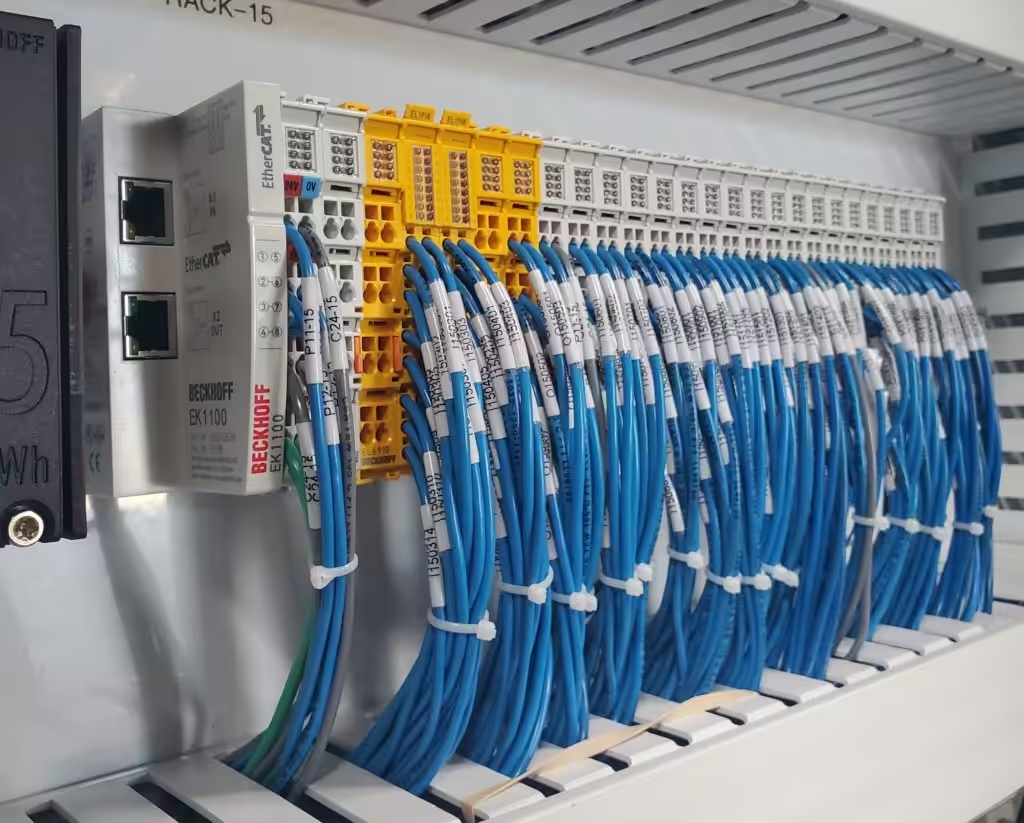
Where it fits: Beckhoff takes a PC-based approach. The controller is an industrial PC or embedded PC running TwinCAT software, connected to I/O over EtherCAT. It’s common in high-speed machines, motion-heavy equipment, and systems that need tight timing or a lot of data processing on the controller.
What to know:
- Software. TwinCAT 3 integrates with Microsoft Visual Studio. It supports IEC 61131-3 languages and also allows C and C++ modules, which suits engineering teams with software backgrounds.
- Network. EtherCAT, which Beckhoff developed and opened to other manufacturers through the EtherCAT Technology Group, is fast and well suited to distributed I/O and motion.
- Hardware. Small EtherCAT terminals snap onto a coupler on DIN rail, which keeps I/O compact and lets it sit close to the field devices.
- Safety. TwinSAFE adds safety logic and safety I/O on the same network.
Trade-offs: PC-based control brings PC questions with it: the operating system, updates, and how the controller is protected on the network. The local pool of TwinCAT-experienced technicians is thinner than for Allen-Bradley in many U.S. regions. Beckhoff I/O is also used on its own as remote I/O, which is one way it shows up in panels built around other controllers.
Keyence PLC
Where it fits: Keyence is best known for sensors, measurement, machine vision, and barcode readers, and many conveyor systems already use Keyence scanners or vision at induction, print and apply verification, or quality checks. A Keyence PLC from the KV series is often chosen for compact machines and cells where Keyence sensing and vision are central.
What to know:
- Software. KV series controllers are programmed in Keyence’s KV STUDIO, which is ladder-centric and known for its built-in debugging and monitoring tools.
- Network. Current KV controllers support EtherNet/IP, so a Keyence PLC can connect to the same networks many North American systems use.
- Sales model. Keyence sells direct through its own sales and application engineers rather than through distributors. Some customers value that responsiveness; others prefer the local distributor stock they’re used to.
Trade-offs: a Keyence PLC is less common as the main controller for a large, building-wide conveyor or sortation system, so finding outside technicians who know it well can take more effort. Spares come through Keyence’s direct channel rather than a local distributor shelf.
PLC Brands Compared Side by Side
This table summarizes the four PLC brands at a high level. It’s a starting point for a conversation with your controls engineer, not a specification. Product names and capabilities change, so confirm current details with each manufacturer.
| Allen-Bradley | Siemens | Beckhoff | Keyence | |
|---|---|---|---|---|
| Architecture | Dedicated PLC hardware (ControlLogix, CompactLogix, Micro800) | Dedicated PLC hardware (S7-1200, S7-1500) | PC-based control (industrial and embedded PCs) | Dedicated PLC hardware (KV series) |
| Engineering software | Studio 5000 Logix Designer | TIA Portal (STEP 7) | TwinCAT 3 | KV STUDIO |
| Native network | EtherNet/IP | PROFINET | EtherCAT | EtherNet/IP on current models |
| Sales and support | Authorized distributors | Distributors and Siemens | Beckhoff and partners | Direct from Keyence |
| Common material handling role | Building-wide conveyor and sortation in many North American sites | European-built equipment and OEM machines | High-speed, motion-heavy machines; remote I/O | Compact machines and cells built around Keyence sensing and vision |
Where Each Platform Tends to Fit in a Conveyor System
The problem: a distribution center isn’t one machine. Receiving, transport conveyor, merges, the sorter, picking, print and apply, and shipping each have different speed, safety, and uptime needs, and equipment often arrives from different vendors with its own controls.
The engineering answer: decide which PLC brands control which parts of the system, and design the handoffs between them.
Building-wide conveyor and sortation. This is the backbone, and it’s where standardizing on one platform pays off most. One programming environment, one spares list, and one skill set for the system that runs every shift.
OEM machines. Palletizers, case erectors, automated storage, and robotic cells often ship with the PLC brand their manufacturer prefers. Specify the interface (network, data exchange, interlocks, and e-stop handoffs) in the purchase order, not after delivery.
Vision, scanning, and inspection. Scan tunnels, vision systems, and label verification devices from any manufacturer typically connect to the main controller over the network. They don’t require the main PLC to match.
High-speed or motion-heavy equipment. Some machines justify a platform optimized for motion and timing. That’s a fair choice when the equipment needs it and the support plan accounts for it.
Mixing PLC Brands in One Building
The problem: most large facilities already run more than one PLC brand, because equipment arrived from different suppliers over different years.
The consequence: each additional platform adds software licenses, training, spare parts, and integration work. Data exchange between PLC brands (Allen-Bradley to Siemens, for example) needs a gateway, a protocol both sides support, or a supervisory layer such as a WCS. When those interfaces aren’t designed and documented, faults at the boundary are hard to diagnose, because each side’s technician only sees half the picture.
The engineering answer: mixing PLC brands works when it’s deliberate.
- Keep the backbone on one platform, and allow exceptions only where the equipment needs them.
- Document every interface between platforms: what data passes, which network, which device acts as the gateway, and what happens when the link drops.
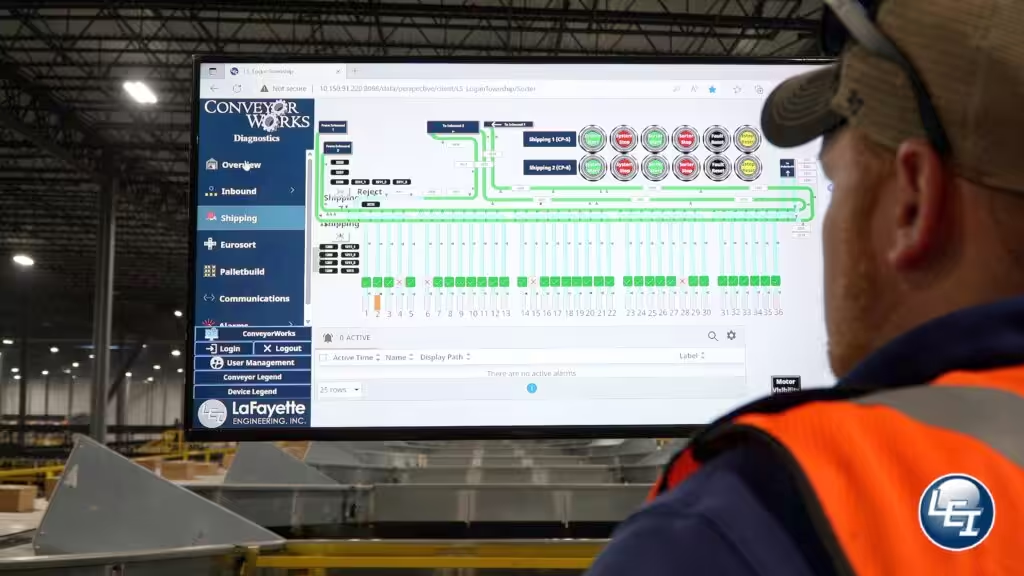
- Show status from every platform on the same HMI or WCS screens, so operators and technicians see the whole system in one place.
- Stock spares and keep software licenses current for every platform in the building, including the ones that rarely fail.
8 Questions That Settle a PLC Standard
These questions keep the choice between PLC brands tied to your operation instead of to habit or a sales presentation.
1. What does your maintenance team already know?
The platform your technicians can troubleshoot at 2 a.m. is worth more than a marginal technical advantage. If your team runs Allen-Bradley today, adding a second platform needs a training plan.
2. Who can support it near your site?
Ask how many integrators and contract technicians near each facility work on each of the PLC brands you’re considering. Thin local support turns small faults into long outages.
3. Where will spares come from, and how fast?
Check whether your controllers, I/O, and drives are stocked by a local distributor or ship from a manufacturer’s warehouse. LEI’s guide to conveyor spare parts strategy covers which parts to keep on the shelf.
4. What network does the rest of the system use?
Your drives, I/O blocks, scanners, and print and apply systems already speak a network. Matching the controller to that network avoids gateways and the troubleshooting they add.
5. What does the equipment actually require?
Most conveyor logic doesn’t need the fastest controller available. Size the platform to the real tracking load, scan time, and I/O count, with margin for growth.
6. Where does each platform sit on its lifecycle?
Choose current offerings and know the status of what you already own. LEI’s article on end of life vs. active mature explains how to read lifecycle notices and when to act.
7. Who owns the code, and can someone else open it?
Whatever the brand, insist on the unlocked source program, comments, and passwords at handover, and confirm a qualified engineer from another company could open it with standard manufacturer tools.
8. How will it be secured?
Every platform here offers security features, and every one of them can be left wide open. Plan network segmentation, user access, and remote support connections with your IT and security leads. CISA’s industrial control systems guidance and the ISA/IEC 62443 series are common references, and LEI’s article on PLC security for warehouses and DCs covers the practical side.
Lifecycle, Migration, and Changing PLC Brands
The problem: the PLC brand question comes up most often when an old platform reaches end of life. Leadership has to decide whether to migrate within the same brand or switch.
The consequence: switching PLC brands during a migration means rewriting the logic, retraining staff, and replacing spares, in addition to the hardware cutover. Staying with the same brand usually allows a phased migration with converted or reused logic and a smaller training burden.
The engineering answer: weigh the switch on operating grounds.
- Stay when your team, spares, and other systems are built around the current brand and its current generation fits the job.
- Consider switching when the site is standardizing on a different brand, local support for the current one is thin, or the equipment needs capabilities the current platform doesn’t offer.
- Either way, test the new logic offline before cutover, plan the cutover around production, and update drawings and documentation as you go.

How LaFayette Engineering Approaches Platform Selection
LaFayette Engineering designs and installs controls for conveyor systems, including high-speed case sortation. Most of LEI’s work is on Allen-Bradley platforms, so Rockwell’s product families and lifecycle calendar are part of its daily routine.
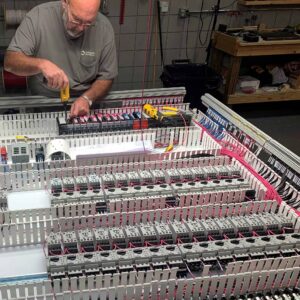
LEI’s controls practice uses only open, non-proprietary components and programming architectures, with components from recognized manufacturers so spare parts are available locally. That principle applies whatever PLC brands a facility runs: the owner should be able to get parts, support, and changes from more than one source. LEI’s published controls process runs from an assessment of the operation’s needs through conveyor concepts, AutoCAD Electrical drawings, in-house panel fabrication, PLC programming including sortation logic, field installation, start-up support, and ongoing support.
The Pitman Creek success story is one published example: the fishing tackle distributor’s facility in Stanford, Kentucky runs on an Allen-Bradley PLC with SICK cameras, Balluff communication blocks, and LEI’s ConveyorWorks WCS. After start-up, LEI’s support team can connect directly to a PLC over a customer-provided VPN under warranty, business-hours, or extended 24/7/365 coverage.
If you’re setting a PLC standard for a new building or deciding what to do with an aging platform, LEI’s PLC controls team can help you weigh the options against your operation, your staff, and your existing equipment.
This article is general information, not engineering advice. Product names, capabilities, and lifecycle status change; confirm current details with each manufacturer for your application.
Frequently Asked Questions
What are the major PLC brands used in material handling?
Allen-Bradley (Rockwell Automation), Siemens, Beckhoff, and Keyence are four platforms operations and engineering leaders see often in conveyor, sortation, and packaging equipment. Others exist, and many buildings run more than one, especially when equipment comes from different OEMs.
Which PLC brand is best for a conveyor system?
There’s no single answer. Most major PLC brands can run conveyor and sortation logic well. The better choice is usually the platform your technicians already know, that local integrators support, and whose spares you can get quickly.
What is the difference between Allen-Bradley and Siemens PLCs?
Allen-Bradley controllers are programmed in Studio 5000 and use EtherNet/IP natively. Siemens SIMATIC controllers are programmed in TIA Portal and use PROFINET natively. Both are capable; the practical differences are software, network, local support, and what your staff and other equipment already use.
Is a Keyence PLC good for conveyors?
A Keyence PLC from the KV series can control conveyors and machines, and it fits well where Keyence sensors and vision are central. It’s less common as the main controller for a building-wide sortation system, so check local support and spares before standardizing on it.
What makes Beckhoff different from other PLC brands?
Beckhoff uses PC-based control: an industrial or embedded PC runs TwinCAT software and connects to I/O over EtherCAT. That suits high-speed and motion-heavy machines and teams comfortable with PC and software tools.
Can different PLC brands work together in one facility?
Yes. Data passes between platforms through shared protocols, gateways, or a supervisory layer such as a WCS. Each interface should be designed and documented, and every platform needs its own spares, licenses, and trained staff.
Should we switch PLC brands during a migration?
Only for operating reasons, such as a site standard, thin local support, or equipment needs. Switching adds a logic rewrite, retraining, and new spares to the migration. Staying with the same brand usually makes a phased cutover simpler.
Do PLC brands affect cybersecurity?
Each platform offers security features, but the bigger factors are network segmentation, access control, secured remote access, and keeping firmware and software current. Older controllers across all PLC brands often lack modern security features.